Tarot & Spiritual Therapy: Finding Meaning Through Reflection
Tarot and other spiritual tools can offer a thoughtful, reflective way to explore emotions, inner conflict, and personal meaning in therapy. Rather than predicting the future, these tools can support self-awareness, mindfulness, and healing when used in a way that feels authentic to the client.
The Use of Tarot and Other Spiritual Tools in Therapy
In recent years, therapy has become more open to integrating tools that speak to the whole person- mind, body, and spirit. There is a growing trend in therapy of the thoughtful use of tarot and other similar spiritual tools, like oracle cards or archetype decks, to help bring insight and consider different perspectives. For many people these practices are not merely hobbies- they are deeply meaningful parts of how they understand themselves and the world. But how do tarot cards and spiritual practices fit into something as scientific as clinical mental health therapy? Let’s explore.
So What Is Tarot, Really?
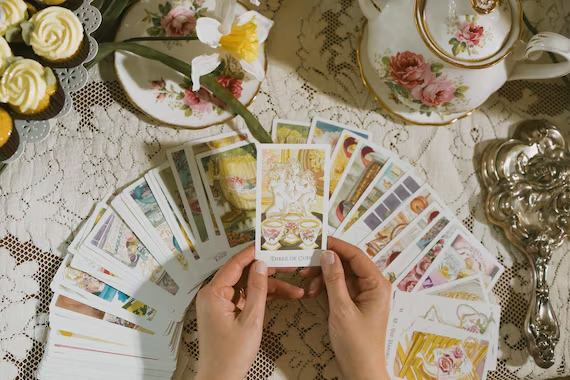
First, let’s demystify tarot. Tarot cards are a deck of 78 symbolic cards that have been used for centuries to tell stories, offer insight, and support self-reflection. Contrary to popular belief, tarot is not about predicting the future- it’s not a crystal ball that will tell you how to live your life. Instead, you might think of it as a mirror- tarot cards can reflect your thoughts, feelings, and experiences in symbolic form. Tarot doesn’t hand you the answers- it helps you find them within yourself.
Therapy Meets Spirituality
Traditionally, therapy focuses on mental and emotional health through evidence-based, data-driven techniques. But many therapists are recognizing that spirituality- your personal sense of meaning, purpose, or connection to something greater- can play a vital role in healing and fulfillment. And these things can’t always be measured through scientific means- which is where tools like tarot come in. Because more and more practitioners are recognizing the value in a holistic approach to wellbeing, we now have access to tools like tarot that can help us view ourselves and our experiences in a different way and honor all aspects of what makes you uniquely you. We often say that when discussing topics of a transpersonal nature it can be challenging to “eff the ineffable,” but tarot and other spiritual tools can often help give us the language and framework that puts words to our experiences.
For some, spirituality means organized religion. For others, it’s nature, energy, ancestors, witchcraft, or simply the mystery of existence. Whatever form it takes, when spirituality is respected and included in therapy, it can provide strength in difficult times, enhance self-awareness, and help guide us.
How Tarot & Spiritual Therapy Works
Tarot can be a powerful reflection and self-exploration tool. A therapist might invite you to draw a card and explore what it brings up for you emotionally, mentally, and physically. The symbolism can act as a prompt for discussion and processing, similar to dream analysis or journaling. There are no right or wrong answers. This may not look like a traditional tarot reading that you might be familiar with, where the reader informs you of what they are seeing in the cards. Instead, you might be asked to infer your own meaning from the symbolism to explore your unique perceptions and how these elements fit into your story.
Tarot can also help bring clarity to inner conflicts you have been experiencing. Feeling stuck or unsure of what to do next? Tarot imagery can often help uncover subconscious fears, desires, or patterns that you may not have been aware of. Tarot allows you to place your struggles into a narrative and address them in a new, creative way. You become the hero of your own story- facing challenges, overcoming and growing, and ultimately transforming. The mere act of pulling a card, reflecting, and setting intentions can often be calming and centering- a way to be present and check in with yourself. Using this or other spiritual rituals to support mindfulness can help give you and your feelings the space and attention they deserve.
Is This Right for Everyone?
Not necessarily- and that’s okay! If tarot or spiritual practices don’t resonate with you, therapy still works just as well without them. But if you do find meaning in these kinds of tools, it can be incredibly validating to work with a therapist who honors your spiritual language. What matters most is that therapy feels authentic to you, so if things like tarot are a part of your journey- great! If not, that is totally fine too.
Final Thoughts
So, you don’t have to choose between science and spirituality- many people find healing and meaning in both. Whether you’re pulling a tarot card or doing a therapy worksheet, the goal is the same: greater self-understanding, healing, and growth. Looking outside of ourselves can often bring positive change in ways we never knew possible. If it speaks to your soul, it can be a powerful part of your mental health toolkit. Come see Autumn Robida at Fearlessly Authentic Psychology today.